We are living in a digital world, but I am a nature child!
Sunday, November 1, 2026
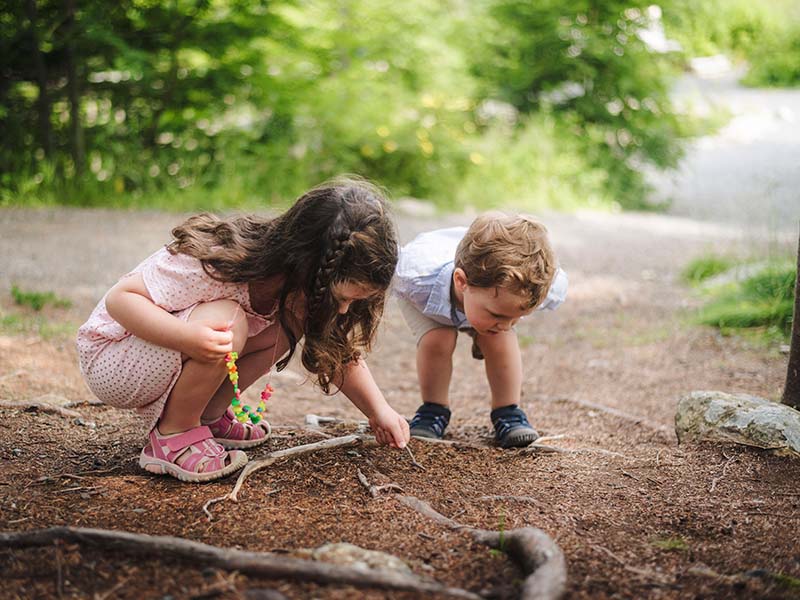
With the rise in digital technology, we see children fixated on devices and losing their connections to the world around them.
Picture this; a child is playing a game on the iPad, they touch the screen a few times, it vibrates, it makes different noises, there’s bright lights, then a huge celebration to say YOU WIN!! The child gets instant gratification, they feel excitement, accomplishment and then they are straight back to the screen for the next level to do it all again. They may learn some developmental skills such as fine motor, problem solving, and sequencing, but holistically, their development can be impacted.
Let’s step outside and consider how the natural world will support a child’s development holistically.
In the natural world the child is able to explore their five senses;
- Grow herbs, fruit, and vegetables they can taste.
- Listen to the sound of the rain, wind, birds, and rustling of leaves.
- See the different natural colours, the different living things like plants, animals and insects that share our world.
- Smell the flowers, the fruits, the different plants, and trees.
- Feel the different textures of leaves, trees, rocks, sand, and water.
Encouraging children to explore the world around them through their sense supports their strong connection to nature, and sparks imagination and creativity.
We could provide children with plastic fruits and vegetables, toy plates, cutlery, pots and cups and they will engage in role play using their imagination – but everything is clearly represented; what if we used leaves, flowers, rocks, shells, sticks, and other natural materials? The child will use their imagination to make these resources represent different objects and this will foster their creativity.
Natural resources provide open ended opportunities where children can express their ideas and lead their play and learning experiences.
Let’s say an educator wanted to support children to connect with the natural world, so they organise an activity where children will explore the outdoor environment and collect natural resources that have fallen to the ground, they put them in a basket and together make a group collage; how does this support each domain of development?
- Physical: exploring the environment has children walking or running around, they are then using fine motor skills to collect and place natural resources for the collage.
- Social: children are able to interact with each other and work together to create a nature collage, they can talk as a group about what they collected and where they found it.
- Emotional: studies have shown that spending time in nature supports emotional well-being; children would also be given the opportunity to understand ways to respect the choices of others when working together on a group project, and also voice their own ideas.
- Language: you have the opportunity to engage in group conversations, ask questions like “Where did you find that? Where did it come from? How can we look after the tree your leaf came from? What can you make with that?”; spark conversations throughout the experience!
- Cognitive: children are able to name objects and explain where they come from, how to look after them, and ways they can be used for different purposes to support the way they learn and think about the world around them.
Also consider ways to bring the natural world indoors; you can use natural resources for play, utilise natural light and air flow, listen to nature sounds, have nature themed set ups or projects, and care for indoor plants just as some examples!
It is not just children that need to connect with nature, but adults too! In a fast-paced world, it can be easy to scroll social media or play games on your phone, before you know it, three hours have passed. It is a quick escape for your mind to switch off and hyper-fixate on something else, so you can see how children may be in favor of digital devices over nature play, but think of the long-term effects of this. You can fall further behind on your to-do list; children can fall further behind on their development. Your sleep can become interrupted; so can theirs. Your mind can feel foggy, and you find it hard to focus; they can become irritable, have a short attention span, and feel ‘bored’ without all that instant gratification.
Reflect on why you think it is important to stay connected to the natural world - try and task yourself with visiting a new park or beach every month! Go out in the rain, stop and smell the flowers, touch the resources nature provides, or stare at the ants when they are busy working – be in the moment with nature! Help yourself find that connection back to natural world so you can help the children in your care build that connection too!