They Don’t Know You Yet - And That’s Okay
Thursday, October 1, 2026
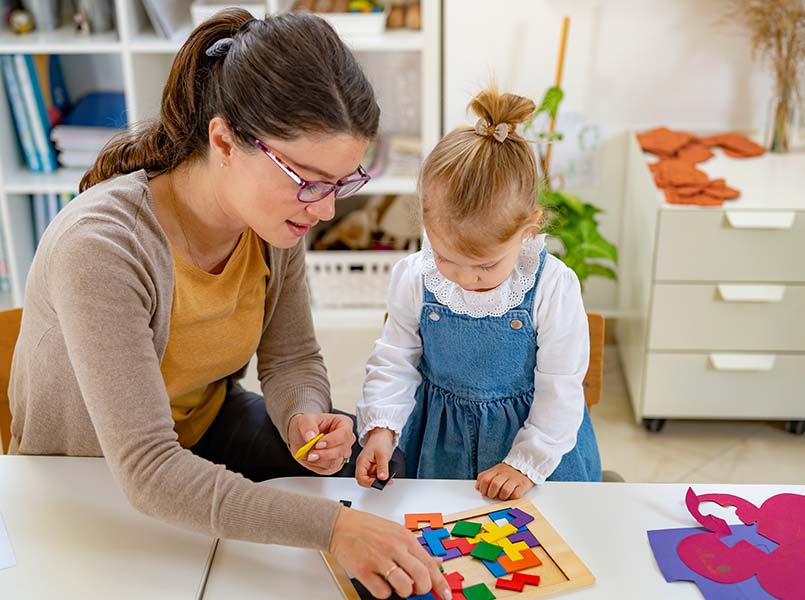
Building genuine relationships with children as a new educator
Starting in a new early childhood service can feel a little awkward.
You walk into a room full of children who already know their educators, their friends, their routines and their environment - and then there’s you.
You sit down beside a group of children and suddenly have absolutely no idea what to say.
So, you go with:
“What are you building?”
“What's your favourite colour?”
And sometimes…. you get absolutely nothing back.
Maybe they give you a one-word answer. Maybe they look at you suspiciously. Maybe they pick up their toy and move somewhere else.
That doesn't mean you're bad at connecting with children. They just don't know you yet.
Relationships aren't built in one amazing interaction. They're built through lots of small moments, over and over again.
And you don't need to be the loudest, funniest or most entertaining educator in the room to build beautiful relationships with children.
You just need to be present, interested and consistent.
Start small
When you're new, it can feel like you need to introduce yourself to every child and immediately become part of the room.
You don't. Start with one space. Sit near the children and observe what's happening. Listen to their conversations. Notice what they're interested in.
And don't feel like you need to fill every silence with questions.
Instead of:
“What are you building?”
Try:
“Whoa, that tower is getting really tall.”
Instead of:
“What colour is your car?”
Try:
“That car is FAST!”
You're still starting a conversation, but you're not putting pressure on the child to respond.
Sometimes the best way to begin a relationship is simply showing a child:
I see you. I'm interested in what you're doing. And I'm happy to be here with you.
You don't have to entertain children
This is something new educators can put a lot of pressure on themselves about.
Building relationships doesn't mean becoming the entertainer of the room.
You don't need an incredible activity every time you arrive.
You don't need every child to think you're hilarious.
And you definitely don't need to take over children's play to prove that you're involved.
Some of the most meaningful connections happen during completely ordinary parts of the day.
Helping a child put their shoes on. Sitting together at lunch. Comforting them after a difficult goodbye. Remembering that they LOVE dinosaurs. Talking with babies during a nappy change. These moments might not look impressive.
But they're often where trust is built.
Follow their lead
Imagine you're sitting at a table working on something you really enjoy.
Someone sits beside you and immediately starts:
“What are you making?”
“What colour is that?”
“How many do you have?”
“Can you count them?”
“What shape is that?”
Exhausting, right?
Questions absolutely have a place in children's learning, but connection shouldn't feel like an interview.
Sometimes, just join them.
If they're pushing cars across the floor, grab a car.
If they're making pretend coffees, order one.
If they're digging for dinosaurs in the sandpit, start digging.
If they're drawing, sit beside them and draw too.
You don't always have to lead the play.
Sometimes one of the best things you can say is:
“Can you show me?”
Then let the child take the lead.
So, why do relationships matter so much?
Time for a tiny bit of theory, I promise we'll keep it simple.
You might come across John Bowlby and Attachment Theory during your ECEC studies.
Attachment theory highlights the importance of children's early relationships and the sense of security that can develop when the adults around them respond consistently and sensitively to their needs.
When children feel safe and supported, they have a secure base from which they can explore their environment, interact with others and learn.
As an educator, this doesn't mean you're replacing a child's relationship with their parents or family.
But the relationships children experience with their educators still matter.
When you are warm, responsive, predictable and genuinely interested in a child, you help create an environment where they can feel safe, supported and connected.
And suddenly all those little interactions don't seem so little anymore.
Greeting a child by name.
Responding when they seek comfort.
Listening when they're telling you something.
Following through when you say you'll come back.
Being there again tomorrow.
Relationships aren't something extra we do alongside children's learning. They help create the conditions in which children can confidently play, explore and learn.
You've probably seen this in the EYLF too
“Secure, respectful and reciprocal relationships.”
It's one of the principles of the Early Years Learning Framework (EYLF).
And while that phrase can sound very official when you're reading it, in practice it can look surprisingly simple.
Listen. Respond. Comfort. Laugh together. Respect their boundaries. Remember what matters to them. Keep showing up. And allowing relationships to develop at the child's pace.
That's the theory coming to life.
What if a child just… doesn't like me?
That’s okay.
Not every child is going to run up and hug you on your first day.
Some children are naturally outgoing and will happily involve a new educator in their play within five minutes.
Others might take days or weeks before they really interact with you.
And that's okay.
Children are allowed to take their time.
You don't need to force connection.
Keep saying hello. Keep showing interest. Keep being kind and available.
One day, that child who barely acknowledged you might walk through the door, see you and yell your name.
And you'll realise something.
Those tiny interactions weren't actually tiny at all.
You were building a relationship.
One thing to try this week:
Don't put pressure on yourself to “build relationships with all the children.”
Instead, think of one child you haven't connected with much yet.
Spend five genuine minutes in their world.
Sit nearby. Notice what they're interested in. Listen. Make a comment instead of immediately asking a question.
No agenda. No pressure to create an amazing learning experience.
Just be there.
Because strong relationships aren't usually built through one big moment.
They're built through hundreds of little ones.