What If Picasso Had Been Given a Template?
Tuesday, September 1, 2026
Product vs Process Creativity: Embracing Every Child’s Creative Journey
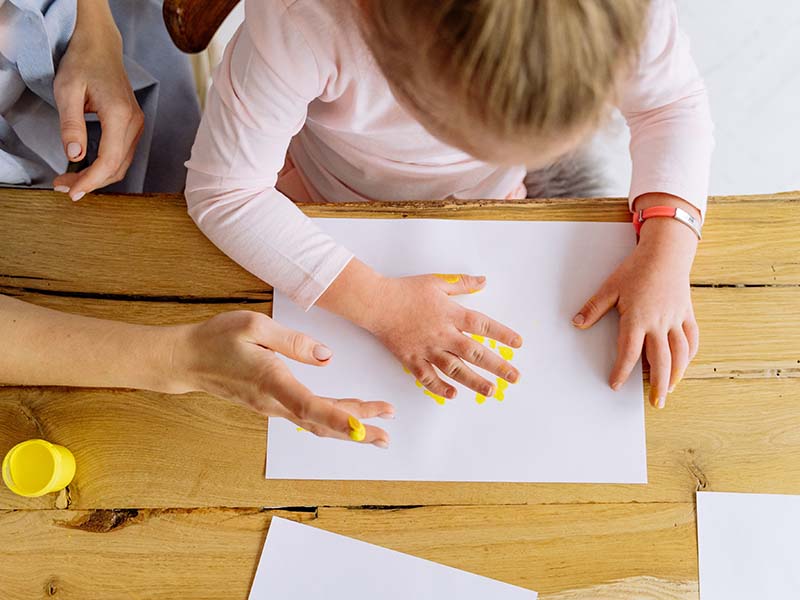
In early childhood education and care, creativity is often celebrated through colourful displays on walls, matching craft activities, and artwork that looks remarkably similar from one child to the next. While these artworks can look great, they often overlook the most important part of creativity—the process. These items can also often be reflections of the educator's work – with cut out templates, or Educators painting the children's hands rather than the child’s work.
When we focus solely on the finished product, we unintentionally place limits on children’s thinking, problem-solving, imagination, and self-expression. Every child deserves the opportunity to explore, create, experiment, and discover in ways that are meaningful to them, and embrace their individual creative expression.
Why Process Matters
Process creativity values the experience over the outcome. It allows children to investigate materials, test ideas, make mistakes, adapt their thinking, and express themselves without the pressure of creating something that meets an adult’s expectation.
There is no right or wrong way to create.
A child mixing colours simply to see what happens, covering paper in circles because it feels satisfying, building a sculpture that exists only in their imagination, or creating a story through loose parts is engaging in deep learning. These moments develop confidence, resilience, critical thinking, communication, and creativity—skills that will support them throughout life. A child using a stick to draw in the sand where they are expressing themselves and there is no ‘end product’ is learning, and certainly not something to be overlooked as we have nothing to put on our walls.
The Power of Open-Ended Materials
Open-ended materials invite possibility.
Loose parts, recycled resources, natural elements, clay, paint, fabric, cardboard, wire, blocks, light, shadow, and found objects encourage children to think beyond instructions. Rather than asking, “What am I supposed to make?” children begin asking, “What could this become?”
These explorations foster innovation because children become the designers, inventors, artists, engineers, and storytellers of their own learning.
When educators step back, observe, and thoughtfully extend children’s ideas rather than directing them, creativity flourishes.
Child-Led Exploration Builds Authentic Learning
Child-led experiences recognise that every child sees the world differently.
Two children presented with the same collection of materials will likely create entirely different experiences. One may construct a city, another may create an animal habitat, while another simply enjoys exploring textures and patterns. Each approach has value because each reflects the child’s own thinking, interests, and curiosity.
There is no template for imagination.
Our role as educators is not to define creativity but to create environments where creativity can thrive.
Creativity Should Never Be Boxed In
Imagine if Pablo Picasso had been told he could only paint landscapes using watercolour paints.
If he had been restricted to one medium, one technique, and one expected outcome, the world may never have experienced the bold, expressive abstract works that challenged artistic thinking and transformed modern art.
Children deserve that same freedom.
When we provide only one way to create, we risk limiting the possibilities that exist within every child. Creativity grows when children are encouraged to experiment with different materials, perspectives, ideas, and ways of expressing themselves.
Their masterpiece may not look like anyone else’s—and that is exactly the point and what makes every piece of artwork special.
The Educator’s Role
Supporting creativity does not mean stepping away completely. It means becoming a facilitator rather than a director.
Educators can nurture creativity by:
- Providing a rich variety of open-ended materials.
- Valuing exploration over perfection.
- Asking open-ended questions instead of giving instructions.
- Celebrating children’s ideas rather than correcting them.
- Documenting the learning journey, not just the finished product.
- Creating environments where curiosity, risk-taking, and experimentation are welcomed.
- Involving the child in the display of their artwork – would they like it displayed, and how?
When we shift our focus from “What did you make?” to “Tell me about your thinking,” we honour children’s voices and deepen their learning.
Celebrating the Journey
In early childhood, creativity is not about producing identical artworks for display. It is about empowering children to think differently, express themselves authentically, solve problems creatively, and discover the joy of exploration.
The paint-covered hands, the structures that collapse before standing tall, the unexpected colour combinations, and the imaginative creations that only a child can explain are where the richest learning occurs.
Because creativity isn’t found in the finished product.
It lives in the wondering, the experimenting, the imagining, and the freedom to create without limits.
When we embrace process over product, we are not simply supporting art—we are nurturing confident, capable, creative thinkers who know their ideas matter
Environmental Awareness and Artwork
When we are displaying artwork – critically reflect on how and why we are displaying and involve the children in the process. Think of your environment as a canvas – does you display, or presentation depict the learning journey that was explored? Is it presented in a meaningful and respectful manner? Before we place a child’s name on the artwork – did we ask for the child’s permission?
We also need to reflect on our services philosophy, as often when we place many items on the wall, or hanging from the ceiling, this can be overstimulating for many children (and also educators). Think about using frames or research into emerging approaches such as ‘Floorbooks’. When you look at our home environments, we don’t have items hanging on every spare section of the wall, hanging from ceilings etc.. why?
ENJOY REFLECTING AND CELEBRATING CHILDRENS CREATIVITY!